Meal rhythm without rigid rules
Regular eating can make a week easier to organise, but routines should leave room for appetite, culture, work and changing circumstances.
Regular eating can make a week easier to organise, but routines should leave room for appetite, culture, work and changing circumstances.
Meal rhythm is the pattern created by meal timing, portion context, snacks, work and sleep. It is not a universal timetable. For one person it may mean breakfast before a commute; for another it may mean preparing food around shifts or caring responsibilities. The most useful plan is the one that can be understood and revisited.
Predictable opportunities to eat can simplify planning.
Travel and appetite may require a different arrangement.
Culture, budget and access shape realistic choices.
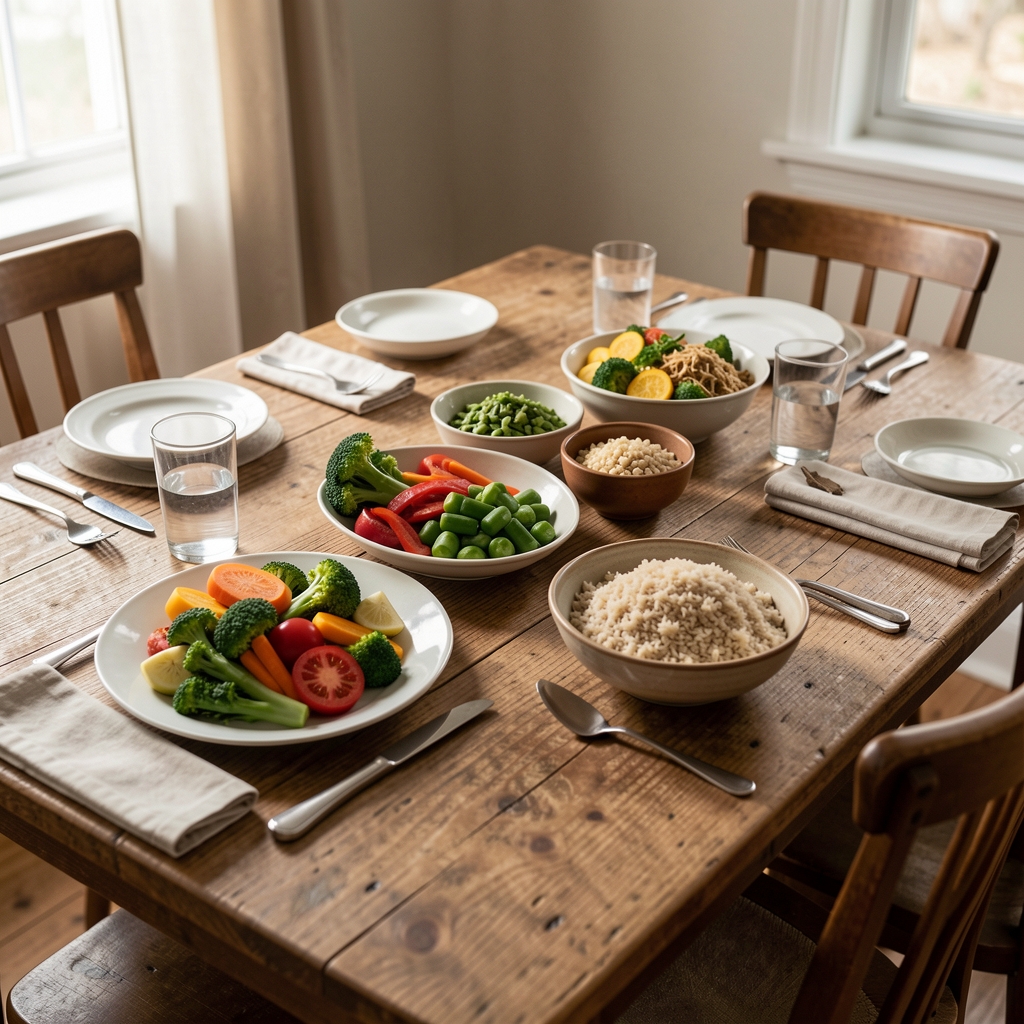
Start by mapping work, sleep and existing meals. Add one planning point rather than redesigning everything. A simple shopping list, prepared ingredient or reliable lunch option can reduce decisions during a busy day. If appetite, digestion or medication affects eating, ask a suitable professional for individual guidance.
Notice how the pattern feels across several days. Avoid using one irregular meal as evidence that a plan has failed. Routines are tools, not moral scores.
Planning steps
Days to review gently
Reliable anchors to begin
Flexible weekly framework
| Pattern | Potential benefit | Question |
|---|---|---|
| Planned breakfast | Less morning decision-making | Does it suit appetite and schedule? |
| Prepared lunch | More predictable access | Can ingredients vary through the week? |
| Flexible supper | Room for social life | What is the easiest balanced option? |
| Planned snack | Useful during long gaps | Is it wanted or simply habitual? |
A meal rhythm should support ordinary life, not turn ordinary life into a test.
If tracking timing becomes stressful, stop and use a simpler observation. Persistent appetite, digestion or energy concerns should be discussed with a qualified professional.
Veridia, 78 Elmwood Gardens, Islington, London, N1 1AB. Phone 020 7946 0958.